
By Stretch Tent ·
Tent setup time depends on the structure, site access, anchoring, equipment and agreed crew plan. Ask for a confirmed working window, then build the other vendor appointments around it. A generic number of hours is not enough to schedule a reception.
The useful timeline shows dependencies: which area must be ready, which team works next and who accepts each handoff. It also includes removal. The event may last one evening while the installation occupies the property for longer.
Start with the venue’s available working windows
Confirm when crews can arrive, unload, work and leave. Ask about noise restrictions, shared driveways, parking, gate access and other events on the property. Include the person who can resolve access problems on the day.
A venue’s availability is not automatically the installer’s confirmed schedule. The two need to be agreed together. Tell the supplier if the only available window is short or if equipment must move through a building.
Review the professional stretch tent installation guide for the installation process. This timeline focuses on how that work connects with the other teams.

Give the installer the complete scope early
A tent on a lawn, a ballasted installation and a tent combined with a raised floor may need different sequences. Lighting, sidewalls and suspended decor can also affect when other suppliers can enter the space.
Share the actual equipment plan and supplier contacts before delivery appointments become fixed. A late addition can require a different working order, extra handling or a revised approval.
The site feasibility review should include the loading route and staging area. Crews need somewhere to work and organize equipment before the reception looks like the finished plan.
Use a dependency schedule rather than an assumed clock
| Stage | What needs to be ready | Handoff to confirm |
|---|---|---|
| Site access | Clear working area and agreed property access | Venue contact meets the responsible crew |
| Tent and anchoring work | Approved layout and installation conditions | Installer confirms the next safe work stage |
| Flooring and equipment | Agreed sequence with tent team | Surfaces, mounting and cable plans coordinated |
| Furniture and decor | Work area released for those suppliers | Quantities and placement checked against layout |
| Final review | Installation and event equipment ready | Required approvals and operational handover complete |
| Removal | Guests cleared and equipment released | Agreed access and supplier collection sequence |
The order can change for a particular floor or installation system. Ask the suppliers to confirm it rather than treating this example as a construction method or a booked schedule.
Avoid sending every vendor at the same time
A narrow driveway can become the bottleneck even when the lawn is large. Coordinate unloading so a furniture truck does not block the equipment needed to finish the tent. Decide where vehicles wait if a previous delivery runs late.
Keep decorators and other teams out of active installation areas until the responsible crew releases them. A schedule should protect working space, not depend on several trades stepping around each other.
Assign one coordinator to communicate changes. Separate texts to five vendors can leave everyone following a different version of the plan.
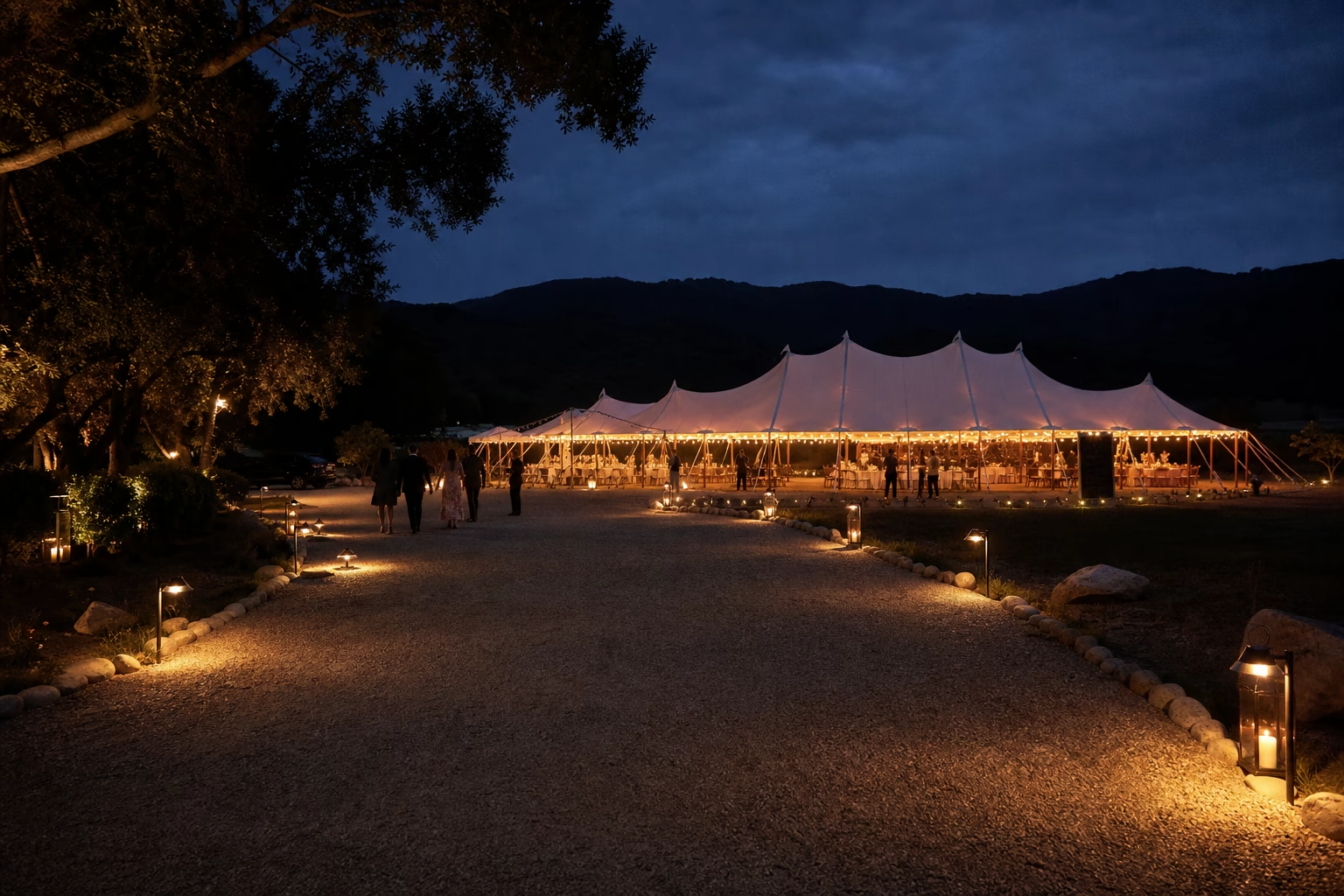
Reserve time for checks before the celebration
Ask when the tent and selected equipment will be ready for the event team to review. Include any required authority inspection in the sequence and confirm who will attend it with the relevant documents.
Lighting and sound need time for their own checks. Furniture placement should be compared with the agreed exits, service routes and operating areas before decor makes changes more difficult.
A final walk-through is also the time to clarify weather decisions, equipment operation and who to contact if conditions change. It should not be the first moment the planner sees the actual layout.
Decide what happens if a stage slips
Identify the decisions that can be made without redesigning the event, and those that need supplier approval. If access is delayed, the coordinator should contact the affected teams before they arrive at a blocked site.
Do not solve a delay by compressing necessary installation or inspection work. Ask the responsible suppliers to revise the sequence and explain the effect on the remaining schedule.
Allow a practical contingency between the confirmed handover and guest arrival. The appropriate amount depends on the scope and venue; it should be agreed rather than copied from another wedding.
Plan removal with the same care as setup
Confirm when guests leave, who clears personal items and which vendors remove equipment first. The tent crew needs the agreed area and access route available for its work.
Check overnight restrictions and the property’s next booking. A planned next-day collection can fail if another event needs the same space early in the morning. Put the actual removal window in each relevant agreement.
Our rental service includes the installation and removal scope stated in the proposal. The exact working dates and supplier responsibilities must match your event schedule.
Send one schedule brief
Share the date, venue working windows, guest arrival time and supplier list. Include special access conditions, flooring, lighting, entertainment and any inspections you know are needed.
Request a tent and installation quote. Ask for the tent working window and coordination needs before fixing the rest of the delivery calendar.
Frequently asked questions
How many hours does tent setup take?
There is no reliable universal answer. The tent, anchoring, ground, access and crew plan determine the working window. Confirm it with the installer for your site.
Can the furniture arrive before the tent?
Only if the suppliers agree on suitable staging and access. Furniture placed in the work area can delay installation or need to be moved again.
Can we install everything on the wedding morning?
That depends on the complete scope and available window. Ask the suppliers to confirm feasibility before relying on a same-day schedule.
Who should manage the vendor timeline?
Name one event coordinator or responsible contact and share the agreed schedule with every supplier. Each supplier still owns its specialist work and handoff conditions.