By Stretch Tent ·
To keep a wedding tent cool, start with the sun, the event time and the way air moves through the space. Then choose equipment that fits that setup. A shaded, open reception and an enclosed, air-conditioned room need different plans. Adding a fan to the wrong layout will not solve every heat problem.
For a Southern California wedding, review the ceremony, cocktail hour and dinner separately. Guests may spend the hottest part of the day outside the reception tent, or wait in a sunny line while the shaded seats sit empty. The useful question is where people will be when the heat matters most.
Start with shade at the actual event time
Visit the property near the hours you intend to use it. Photograph the sunniest tables, the west-facing edge, the bar and the route from parking. A canopy that shades the lawn at noon may leave a long edge exposed later in the afternoon.
Draw the proposed tent position on a site plan and mark the ceremony, drinks service and guest seating. Ask the installer which orientations and edge heights can work within the approved structure. Keep anchoring areas and access routes visible on that drawing.
A later start may reduce direct sun during dinner, but it does not remove the need to check setup conditions, pre-dinner activities or an unusually hot forecast. Treat timing as one part of the plan rather than a temperature guarantee.
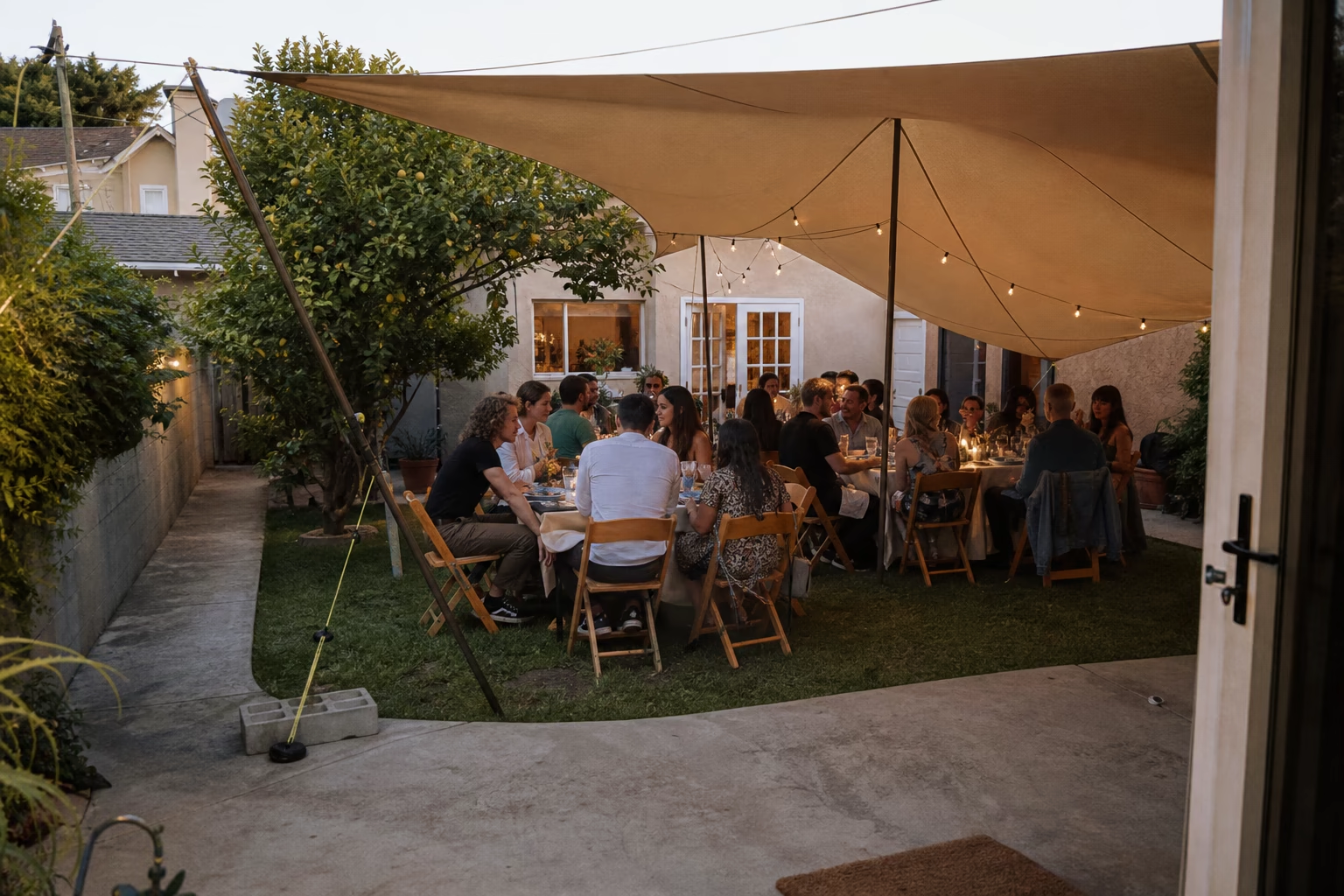
How to keep a wedding tent cool without enclosing it
An open-sided layout lets you plan around natural airflow. Keep the breeze path in mind when placing bars, backdrops, tall decor and service partitions. A wall added for appearance or privacy can change the comfort of the whole room.
Fans move air; they do not create the controlled indoor conditions of an air-conditioned building. Their placement also affects conversation, speeches, candles, napkins and the sound picked up by microphones. Review those conflicts before choosing quantities.
Our site feasibility and comfort guide is a useful starting point for bringing sun, access, ground and guest movement into one discussion.
| Option | What it can contribute | What to resolve first |
|---|---|---|
| Canopy shade | Less direct sun in the covered area | Sun angle, edge exposure and seating position |
| Fans | Air movement where guests sit or gather | Placement, noise, power and clear walkways |
| Misting | Evaporative cooling in a suitable setting | Humidity, water, drift and nearby equipment |
| Air conditioning | A more controlled enclosed environment | Compatible enclosure, cooling load, power and specialist design |
Check water and surroundings before choosing misting
Misting fans for an outdoor wedding need more than a place to plug in. Ask the supplier how the system performs in the expected humidity, what water connection it needs and where moisture could travel. Keep fabrics, food service, electrical equipment and walking surfaces in the conversation.
A misting arrangement appropriate for a separate lounge may be wrong beside a cake table or a sound desk. Do not assume one unit can cover the entire reception evenly. Confirm the intended zone and how the equipment will be operated during the event.
Stretch Tent lists event fans and cooling among its available add-ons. The specific equipment, suitability and availability belong in the site quote.
Treat tent air conditioning rental as a separate design decision
Air conditioning is a question about the complete enclosure, not just a machine. The supplier needs to understand the tent, doors, sidewalls, occupancy, sun exposure, operating hours and power supply. Constantly open access points and large gaps make the task different from cooling a building.
Ask who is designing the system and who is responsible for the enclosure. Confirm duct routes, condensate handling, equipment locations and the power arrangement before approving the furniture plan. These items can take space outside the guest area as well as inside it.
Air-conditioning availability depends on the tent model, site and agreed rental scope. If a controlled indoor temperature is essential to the event, state that at the first inquiry so the team can assess whether the proposed outdoor setup is suitable.
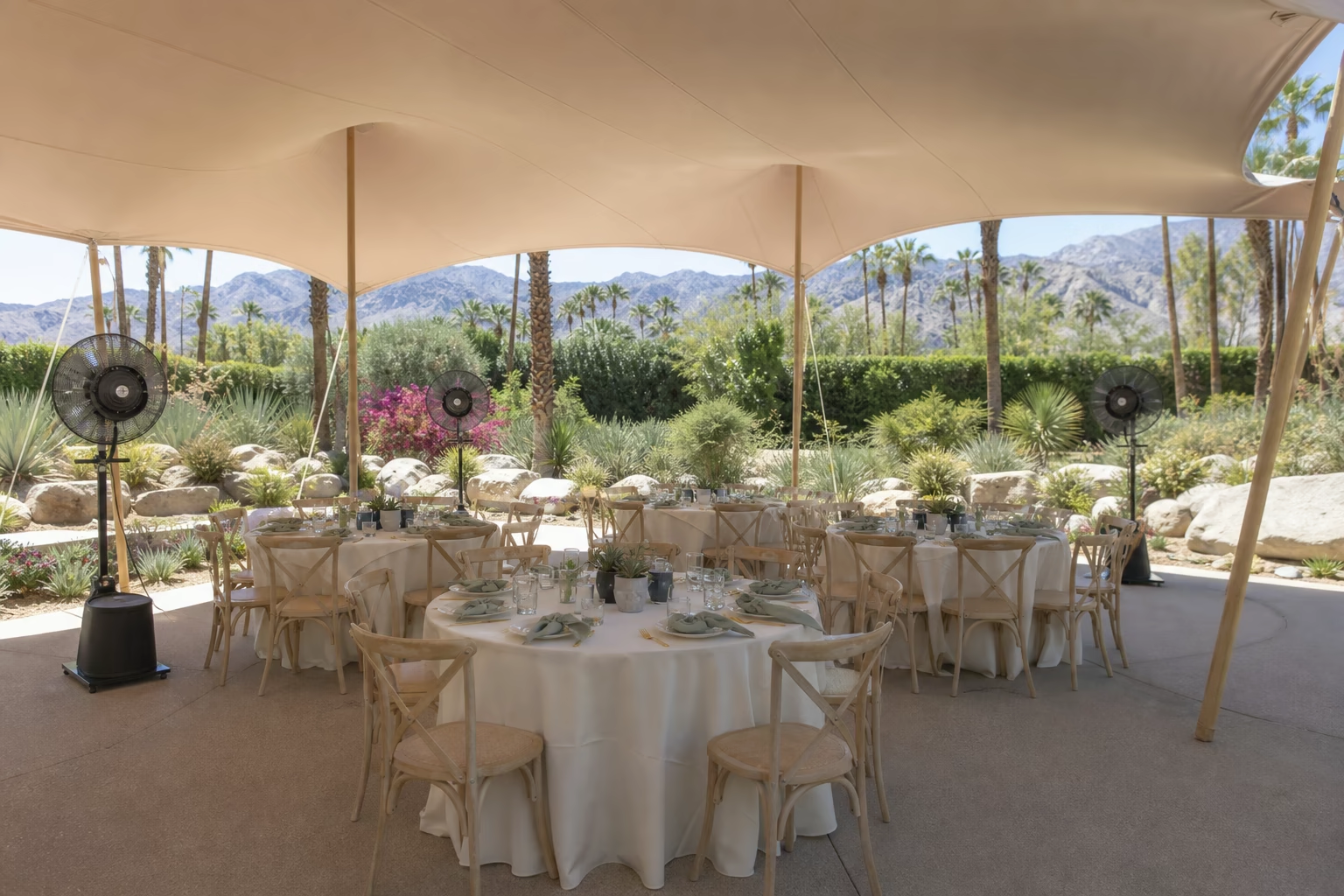
Build the comfort plan around the whole guest journey
Look beyond the dinner tables. Is there shade where guests wait for a ceremony? Can they reach drinking water without crossing the service area? Is there a cooler indoor place available if the outdoor conditions become unsuitable?
Give the planner responsibility for checking the forecast and communicating changes. Set a decision time that leaves enough room for the agreed equipment and crew arrangements. If the fallback is an indoor space, verify its actual availability and capacity rather than assuming the house can absorb everyone.
A weather contingency plan should state what is reserved, when a decision is due and which conditions require a different event plan. A request for information alone does not hold equipment.
What to include in a cooling request
Send the address, date, event hours and guest count, plus a few photos showing the sun exposure and access. Describe whether you want an open reception or an enclosed room, and identify any indoor fallback.
Ask for the proposed equipment, power and water needs, setup window, operating responsibility and removal scope in writing. That makes the quote easier to compare and gives the planner a clear set of decisions.
Request a tent and cooling quote with the details you already have. The next step is a site and equipment review, followed by a proposed scope.
Frequently asked questions
Will a tent make an outdoor wedding air-conditioned?
No. A canopy provides shade, while air conditioning requires a compatible enclosure and a properly designed equipment and power plan. Confirm what the proposed setup can actually provide.
Are misting fans always better than regular fans?
No. Humidity, water access, nearby equipment and the location of guests affect the choice. Ask the supplier to assess the zone rather than selecting misting by appearance alone.
Should we close the sides to keep the tent cool?
Not automatically. Closing sides changes airflow and can make an open-air cooling plan less effective. Review the enclosure and cooling system together.
Can we add cooling shortly before the wedding?
Availability and installation requirements may limit late changes. Include the option early and agree on a decision deadline with the suppliers involved.