By Stretch Tent ·
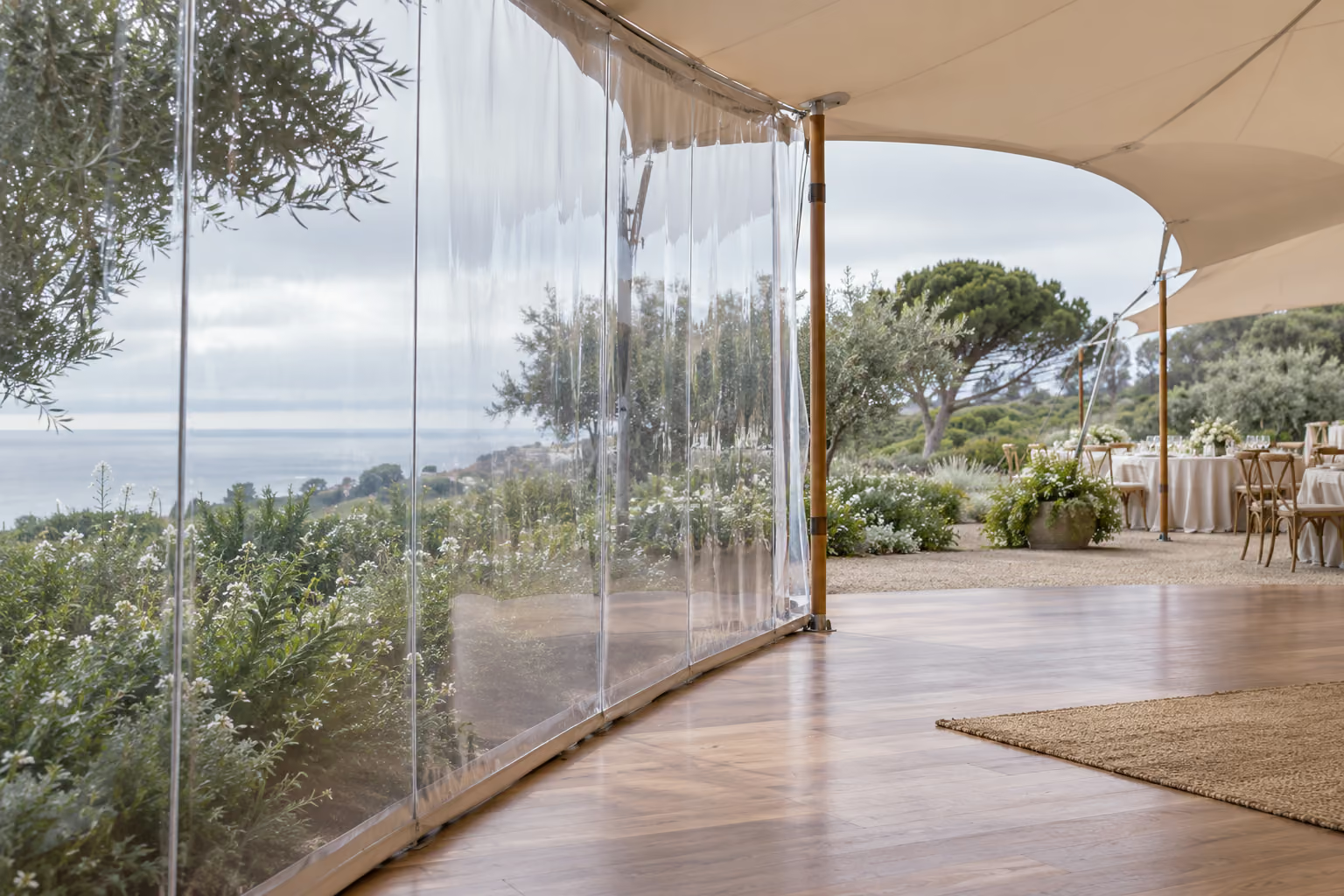
Wedding tent sidewalls can help define a more enclosed space, but they change airflow, views and access as well as exposure to weather. Decide which problem you want them to solve before adding them to the rental. Then confirm that the proposed walls are compatible with the exact tent and installation.
An open garden dinner, a cool evening reception and a site exposed to wind-driven rain can need different arrangements. The right answer may be a particular wall on a particular side, a different approved tent configuration or a different event plan.
A lowered tent edge is not the same as a sidewall
A stretch tent is shaped by its poles, tension and edge positions. Lowering an edge changes the canopy geometry and the space beneath it. A separate wall is an additional component with its own connection and opening requirements.
Do not assume these options are interchangeable. Ask the installer to show the proposed arrangement and explain how it affects headroom, usable space, entrances and the approved structure.
Review the stretch tent layouts with your actual event in mind. The shape that looks appealing in a photograph still needs to work with your guest routes and furniture.
Start with the exposed side of the site
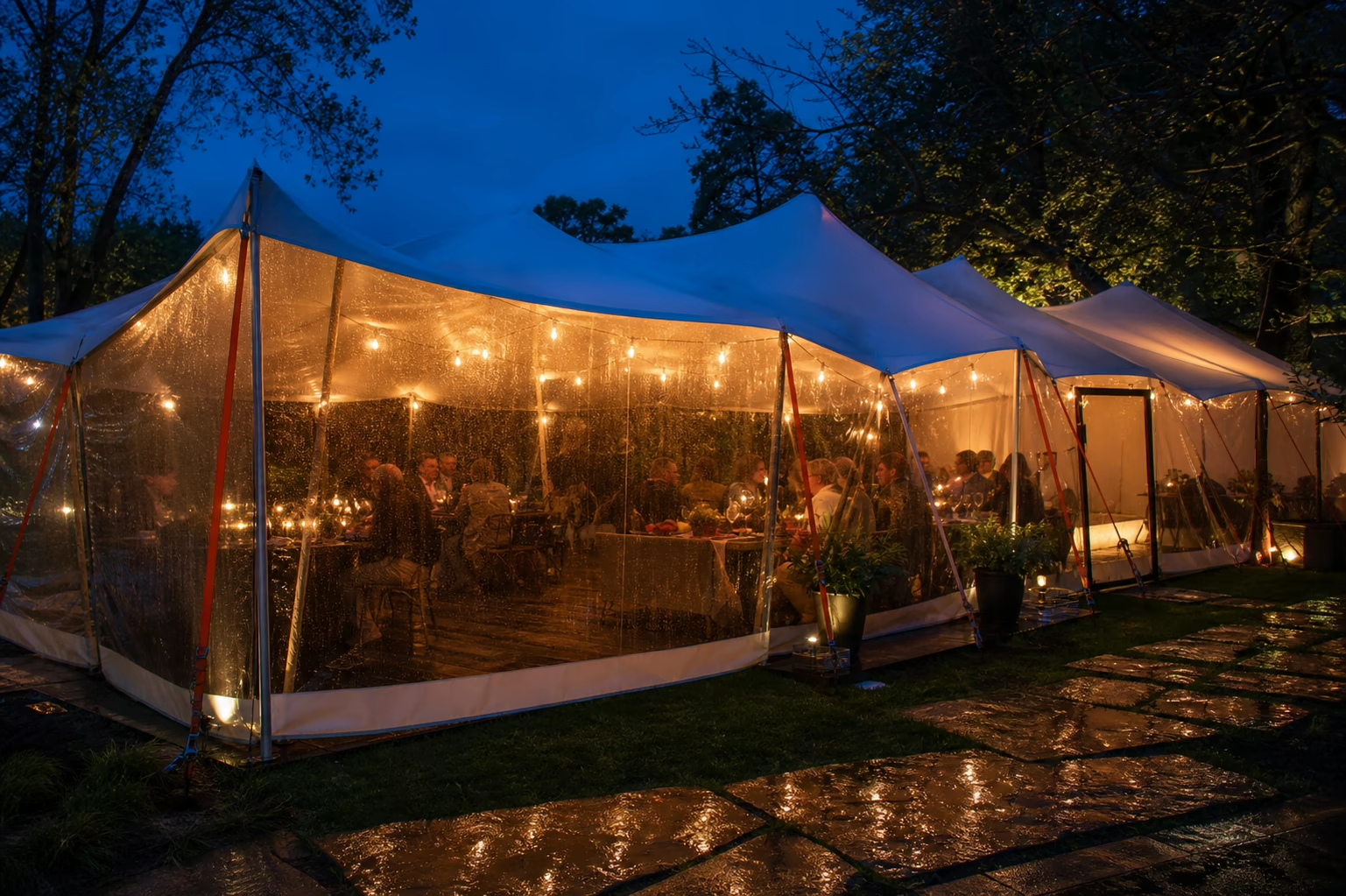
Identify where rain, evening wind or low sun is most likely to affect guests, while recognizing that the actual weather can change. Show the installer nearby buildings, open areas and the position of the reception on the property.
A wall can change exposure at one edge, but it does not solve water flowing across the ground or the uncovered walk to a restroom. Keep drainage and the entire guest journey in the wedding weather plan.
Avoid treating sidewalls as a guarantee against any storm. The approved structure has operating limits, and severe conditions may require moving or stopping the event regardless of the enclosure.
Compare clear and solid walls by their purpose
| Choice | What to discuss | What must still be checked |
|---|---|---|
| Open side | Views, access and airflow | Weather exposure and edge conditions |
| Clear wall | Views through an enclosure | Reflections, heat, ventilation and compatibility |
| Solid wall | Privacy or a defined visual backdrop | Light, airflow, openings and compatibility |
| Lowered canopy edge | A different approved tent shape | Headroom, usable floor area and exits |
A clear wall is not an invisible boundary, and a solid wall is not automatically an acoustic barrier. Ask to see the proposed product and understand its purpose rather than relying on a category name.
Stretch Tent lists clear and solid sidewalls among its add-ons. The final model, quantities and arrangement must be confirmed for the installation.
Plan ventilation and temperature together
Closing a side can reduce air movement. That may change the comfort of a warm afternoon reception or the behavior of a cooling system. If heating or cooling is part of the plan, have the equipment supplier review the enclosure before confirming placement.
Tell the team when guests will arrive, dine and dance. A configuration chosen for a chilly evening can behave differently during daytime setup or an earlier cocktail hour.
Do not bring unapproved heating or combustion equipment into an enclosed tent. The supplier and relevant authority need to confirm the equipment and arrangement. Sidewalls are not permission to treat a temporary tent like an indoor room.
Draw entrances and service routes before ordering walls
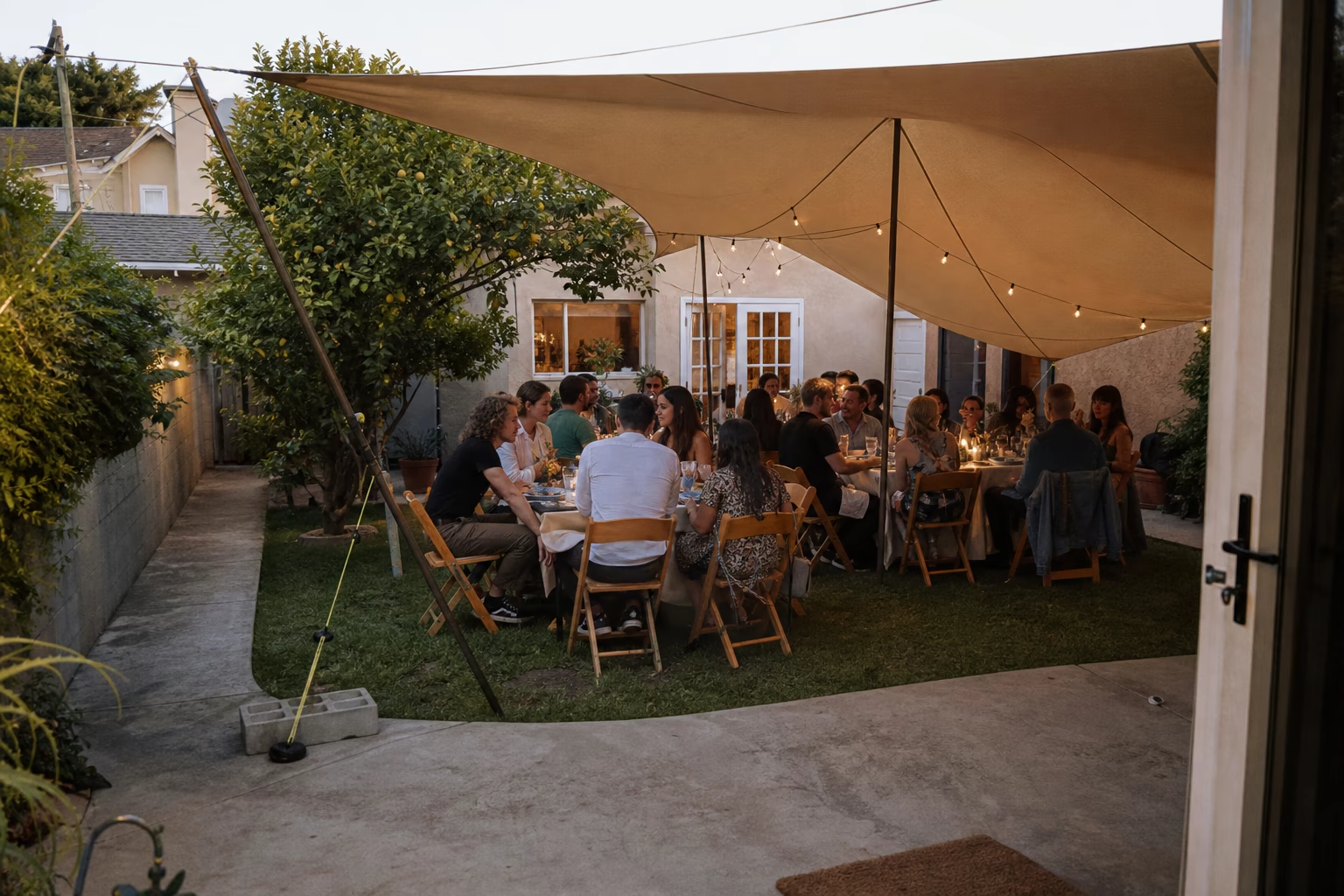
Mark guest entrances, exits, accessible routes and supplier access on the plan. Then place the walls around those needs. A convenient service opening on paper may conflict with a buffet, a bar queue or the way guests reach the restrooms.
Keep those routes in the final furniture and decor drawings too. Draping, signs, plants or furniture should not quietly close an opening that the installation plan depends on.
If the venue or authority requires an inspection, ask when the layout must be ready and what changes need another review. Finalizing a different enclosure after approval can affect more than appearance.
Agree on the weather decision and change responsibility
If the wall arrangement may change with the forecast, put the decision time and responsible installer in writing. Confirm whether the necessary components and labor are reserved, what the change costs and when it can be completed.
Do not plan on guests or a decorator making structural or enclosure changes during the event. The team responsible for the installation should define what can be adjusted and by whom.
A useful quote identifies the walls, attachment system, openings, installation and removal. It also makes clear what remains subject to site or equipment confirmation.
Bring the complete brief to the supplier
Share the address, date, event hours and guest count. Include the reason you want walls: rain exposure, privacy, temperature, a backdrop or several of these. Add photos and any venue restrictions.
Request a tent and sidewall quote so the team can review the tent, openings and equipment together. A confirmed arrangement is more useful than reserving a generic number of walls.
Frequently asked questions
Can sidewalls be added to every stretch tent?
Do not assume so. Compatibility depends on the exact tent, wall product and installation. Confirm the proposed system before ordering.
Do sidewalls make the reception fully weatherproof?
No. Ground conditions, openings, runoff and operating limits still matter. A complete weather plan includes the rest of the site and a response to unsuitable conditions.
Can we decide on walls on the wedding morning?
Only if the supplier has explicitly agreed that arrangement and timing. Equipment, crew availability and approval requirements can make a last-minute change impractical.
Will clear walls keep the same open-air feeling?
They preserve some views, but they still create an enclosure with different airflow, reflections and access. Review the actual product and layout before choosing.