By Stretch Tent ·
Restaurant patio shade should be planned around the tables you want to use during actual service hours. A structure can look impressive while leaving the busiest seats exposed to low afternoon sun. Start with when and where guests dine, then compare the coverage, supports and operating requirements of each option.
Canopies, shade sails and pergolas solve different site problems depending on their exact design. The useful choice is the one that fits the patio’s service pattern, approvals and maintenance plan. There is no single best category for every restaurant.
Observe the patio during the service you want to improve
Mark which tables are uncomfortable or difficult to use at lunch, afternoon service and dinner. Take photographs from consistent positions and note the time. The movement of shade is more informative than one attractive image of the empty patio.
Include staff in the review. Ask where trays travel, where guests queue and which areas need to remain clear. A support post placed in the wrong position can affect service even if it improves shade over a table.
Record the intended outcome in practical terms, such as keeping a particular dining zone covered during lunch. Avoid assuming a shade project automatically creates more licensed seats or a guaranteed revenue increase.
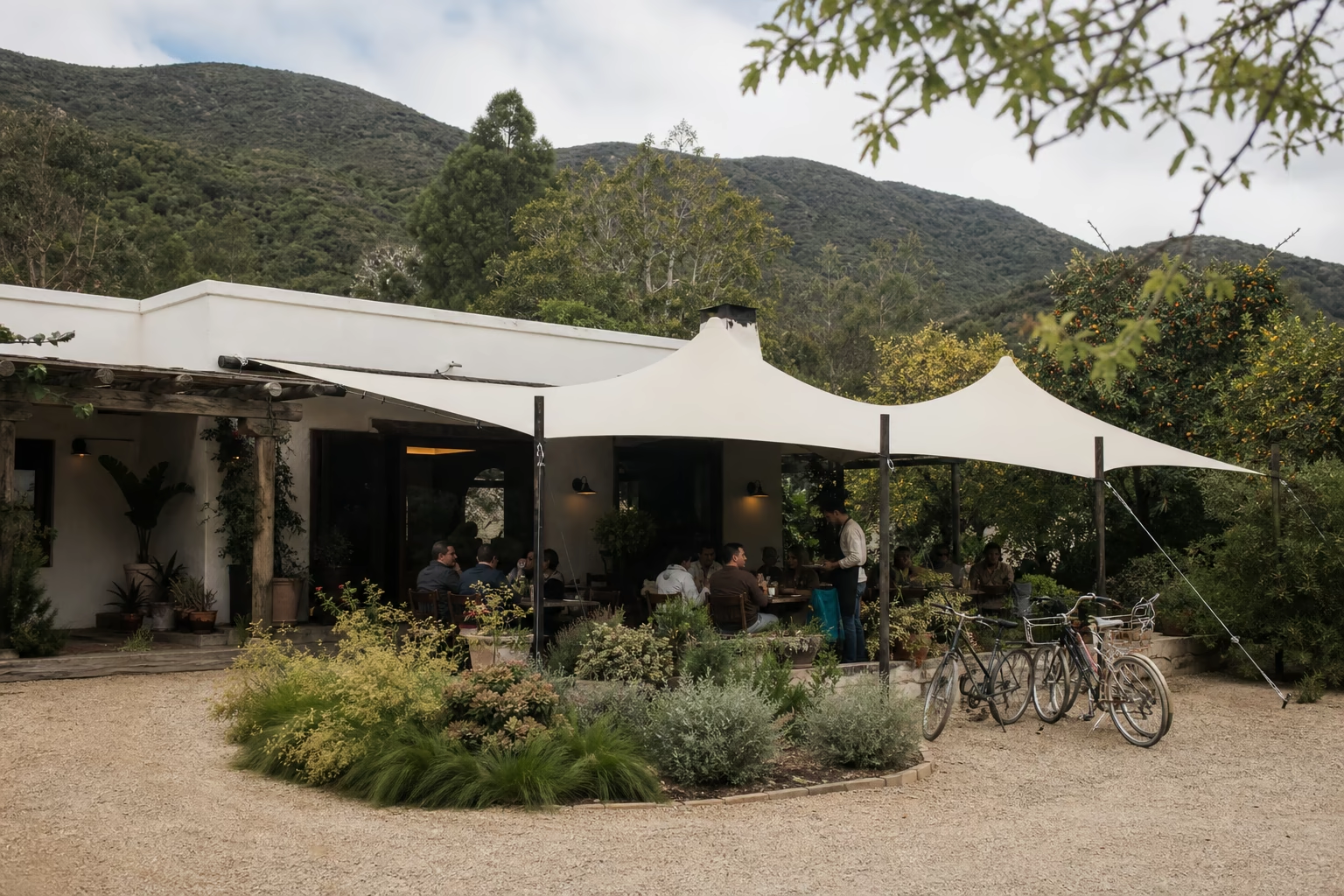
Compare the exact systems, not just their names
| Option | Planning strength to investigate | Questions to resolve |
|---|---|---|
| Canopy or event tent | Defined overhead coverage and configurable layout | Anchoring, operating period, access and weather limits |
| Shade sail system | Coverage shaped around selected areas | Engineered attachment points, sun angles and material properties |
| Pergola | A more permanent architectural framework | Actual roof or slat coverage, approvals and long-term upkeep |
| Individual umbrellas | Coverage for separate tables | Bases, movement, storage and operating procedures |
Each category contains many products. A slatted pergola, a pergola with a roof and one with an adjustable shade system should not be treated as the same level of coverage.
Likewise, do not assume every fabric sail sheds rain or every tent can remain installed indefinitely. Ask for the properties and operating requirements of the exact proposal.
Distinguish shade from rain cover
Decide whether the project is intended for sun protection, occasional event cover or a wider operating plan. Those goals can require different equipment and approvals.
Ask where water will go and whether runoff affects doors, neighboring property, drains or guest routes. A covered dining table is not enough if the only path to it becomes unsuitable in rain.
For an event-based setup, the restaurant and terrace options can start the conversation. Confirm the specific use and installation period before treating an event solution as a permanent building feature.
Preserve the space the restaurant needs to work
Show tables and chairs in use, not just tabletops. Mark the host stand, service stations, entrances and guest routes. Include the area needed for supports and anchoring outside the covered footprint.
Review delivery and removal with the manager. A patio can be accessible when closed but difficult to reach during service, and the crew may need a working window that affects how the restaurant opens that day.
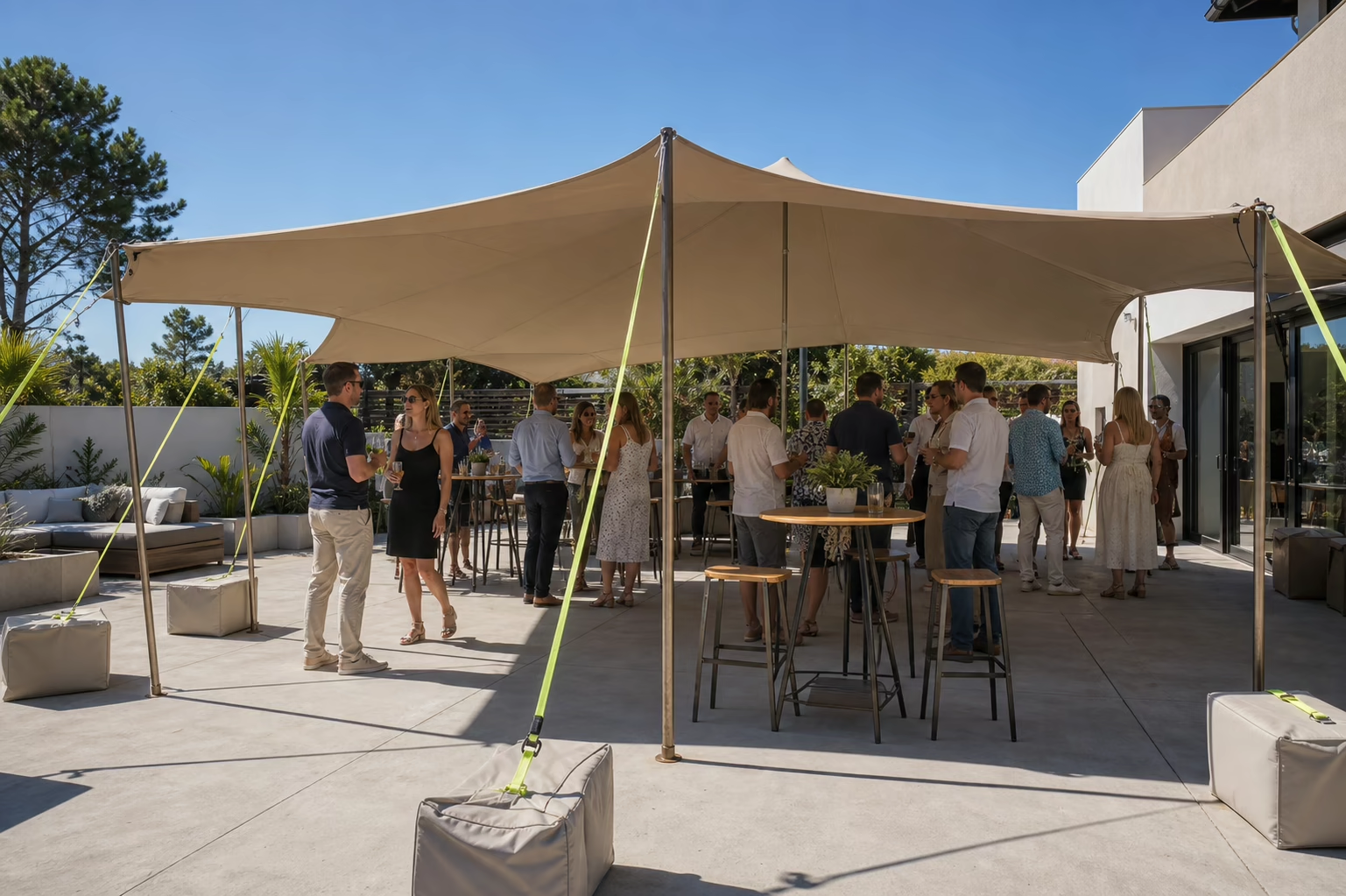
If ballast or a platform is required, include it in the site drawing and quote. The visible shade area should not hide equipment that takes usable floor space or changes the circulation.
Check ownership and approval before choosing the final design
Find out who can approve work on the property and what the lease allows. Existing walls, railings or other building elements should not be used as attachment points without the required review.
Ask the relevant authority which planning, building, fire or other approvals apply to the proposed use and duration. A temporary label does not remove the need to check the actual installation.
Keep any proposed change in seating or service separate from a claim that the canopy itself authorizes it. The restaurant needs the appropriate approval for the way it intends to operate the space.
Compare the cost of operating the solution
List design and approval work, equipment, installation, inspections, maintenance, cleaning, storage and eventual removal. Ask what happens during unsuitable weather and who is responsible for that decision.
For a rental, confirm the permitted period and any service visits. For a purchase, identify who will maintain the system and where removable components are stored. The lowest initial price may leave important recurring work outside the quote.
If the goal is occasional private events, consider starting with one defined booking. The venue outdoor-room approach describes planning around an event and existing suppliers, with future arrangements confirmed separately.
Turn observations into a useful supplier brief
Share the address, patio dimensions, photographs at the relevant service hours and a current table plan. Explain the intended operating period and whether the space needs shade only or another form of weather cover.
Add access restrictions, property-owner requirements and the service routes that must remain clear. Request a patio tent and site quote so the team can assess the proposal against the way your restaurant actually works.
Frequently asked questions
Does a pergola always provide enough shade for dining?
No. Coverage depends on the design, orientation and sun angle. Observe the tables at actual service times and assess the specific proposal.
Can a stretch tent stay over a restaurant patio all season?
That needs a separate review of the product, site, permissions and operating arrangement. Do not assume a standard event rental covers continuous seasonal use.
Will adding shade let us add more tables?
Not automatically. Space, circulation, approvals and restaurant operations still determine the usable seating arrangement. Review those requirements separately.
What should we compare besides installation cost?
Include maintenance, inspections, weather procedures, service disruption, storage and removal. Ask who is responsible for each item over the intended period.