By Stretch Tent ·
Choosing a Burning Man shade structure means choosing a complete system: canopy or shade material, supports, anchoring, transport, installation, operation and removal. Compare those parts together. A low fabric price or a photograph of a successful camp does not tell you what your own setup will require.
Start with the space the camp needs during its busiest hours. Sleeping areas, a shared lounge, a kitchen and a public gathering space may need different arrangements. The best comparison uses the same camp plan and clearly assigns the work each option creates.
Describe the shade you need before choosing the structure
Mark your placement boundaries, intended entrances, service areas and circulation. Identify which activities need cover at the same time and where people will gather when the sun is low.
Roof area and useful shade are not identical throughout the day. Think about the hours the space will be used and the edges that may be exposed. Keep supports and anchoring zones on the plan rather than filling the entire outline with furniture.
If the camp needs several zones, compare one shared canopy with separate structures using the full footprint. Connecting units or adding side coverage requires an approved arrangement; it is not just a way to join attractive shapes.
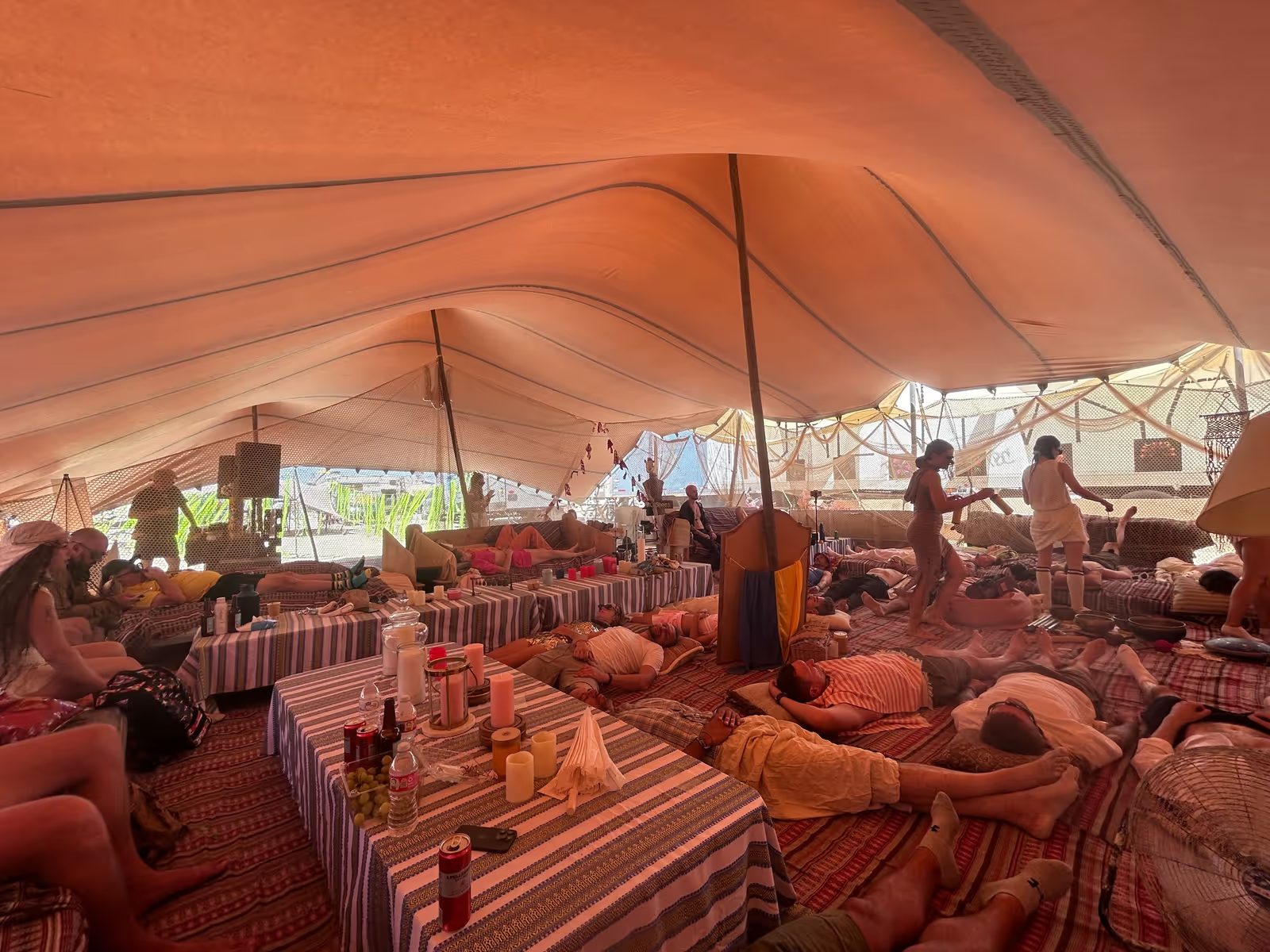
Compare categories without treating them as performance ratings
| Approach | What to investigate | Work to include in the comparison |
|---|---|---|
| Mesh shade system | Exact material, shade coverage and supported configuration | Frame, connectors, anchoring and installation |
| Solid canopy system | Product properties, geometry and operating limits | Supports, tensioning, drainage and crew plan |
| Professionally planned stretch tent | Exact tent, camp layout and installation responsibilities | Transport, anchoring, setup, operation and removal |
| Several smaller structures | Combined coverage and circulation between units | More interfaces, separate anchors and shared responsibilities |
A category name does not prove a wind rating, waterproofness or suitability for the playa. Ask for information about the actual product and configuration you intend to use.
Make anchoring and operating limits part of the purchase decision
Burning Man’s official Securing Your Structure guidance emphasizes wind, severe weather and securing camp equipment. Treat that as a reason to plan the complete installation, not as an engineering approval for a particular tent.
Ask the supplier for the installation requirements and operating limits of the exact system. Ground conditions, exposure, layout and anchoring must be reviewed together. Do not borrow an anchor count or hardware recipe from a different structure.
Name the person responsible for monitoring conditions and initiating the agreed response. A temporary shade structure is not a guarantee of protection in any storm, and adding extra fabric can change the loads on an existing setup.
Budget for transport and the people doing the work
List every item that travels: fabric, poles, anchors, connectors, tools, protective equipment, spares and any agreed flooring or lighting. Confirm packing dimensions, weight and the method for loading and unloading with the supplier.
Then write the crew plan. Who installs the structure, what experience do they need and when is the site available? Who is still present to remove it at the end? A plan based on an unspecified group of volunteers leaves a real task unresolved.
For a rental, confirm whether transport and on-playa installation are included or separately arranged. For a purchase, do not assume the canvas price includes a complete ready-to-install system.
Keep the camp usable around the structure
Mark supports, anchoring zones and equipment so circulation remains clear and understood. Review lighting and nighttime visibility as part of the camp plan. Do not hide important hardware beneath furniture or decorations simply to improve the appearance.
Coordinate the shade layout with sound, service and storage areas. A bar queue or equipment stack can change the way people move through a space that looked open in an early sketch.
Make changes through the responsible installer. An extra banner, suspended decoration or side panel can affect the structure, so it should not be treated as an independent styling decision.
Compare rental and ownership over the full cycle
Ownership adds cleaning, drying, inspection, repair and storage responsibilities after the event. Ask the manufacturer how the exact material and hardware should be cared for, and plan suitable space before buying.
A rental can change who handles some of those tasks, but the agreement still needs clear return conditions and responsibility for damage or missing components. Compare the written scope rather than assuming one route removes all work.
Stretch Tent has deployed tents at Burning Man since 2016. Rental and purchase inquiries are reviewed against camp layout, inventory, transport and crew logistics. The site also explains purchase options and canvas pricing.
Send a camp brief that a supplier can assess
Include placement, dates, camp size, intended activities and the footprint you can use. State whether you need supply only, installation support or a broader rental arrangement. Add your transport and crew constraints early.
Discuss a Burning Man tent setup so the team can review availability and whether rental or purchase fits the camp. The next step is a proposed scope, not a blanket promise about weather performance.
Frequently asked questions
Is mesh always better than a solid canopy on the playa?
No. The exact product, configuration, coverage and installation requirements matter. Compare complete systems against the camp’s intended use.
Does a larger canopy automatically provide better camp shade?
Not necessarily. Sun angle, layout, supports and placement boundaries affect usable shade. Review where people will actually spend time.
Can we copy another camp’s anchoring setup?
Do not assume it applies. The supplier or qualified installer must assess your structure and site. A neighboring camp is not product-specific engineering evidence.
Should we rent or buy for repeated events?
Compare the full cost and work of transport, installation, maintenance and storage alongside rental terms. Repeated use alone does not settle the decision.