Pioneer DJ
- 2 × CDJ-3000 players
- 1 × DJM-V10 mixer
Send us your DJ rider so we can confirm connections and monitoring for the booth.
BLUE BULL / SOUND EXPLAINED
Bass weight, kick body, midrange definition and high-frequency detail. A four-way system divides the music between drivers suited to different parts of the spectrum.
Example bands, not the Blue Bull XTA preset or measured system response. Real filters overlap around each crossover.
Move through 40 Hz–18 kHz. This is a visual guide; it does not play sound.
01 / Sub-bass
40–90 Hz in this example
The low foundation of bass notes and kick drums. The largest drivers handle the low-frequency section of the main system.
02 / Mid-bass
90–300 Hz in this example
The body of the kick and upper bass. A dedicated mid-bass section shares the low-frequency workload with the subs.
03 / Midrange
300 Hz–1.5 kHz in this example
The middle of vocals, synths and instruments. The 10-inch drivers cover this part of the spectrum inside the mid/high tops.
04 / Highs
1.5–18 kHz in this example
Hi-hat detail, vocal consonants and upper harmonics. Compression drivers feed the high-frequency horns in the top cabinets.
BEHIND THE SOUND
Pioneer DJ at the booth, XTA for system processing and Powersoft for amplification. Your quote confirms the equipment and configuration for your event.
Send us your DJ rider so we can confirm connections and monitoring for the booth.
Available for system management. The selected processing and settings depend on the speaker configuration and site.
Amplifiers are configured for the selected speaker package.
THE BLUE BULL STORY
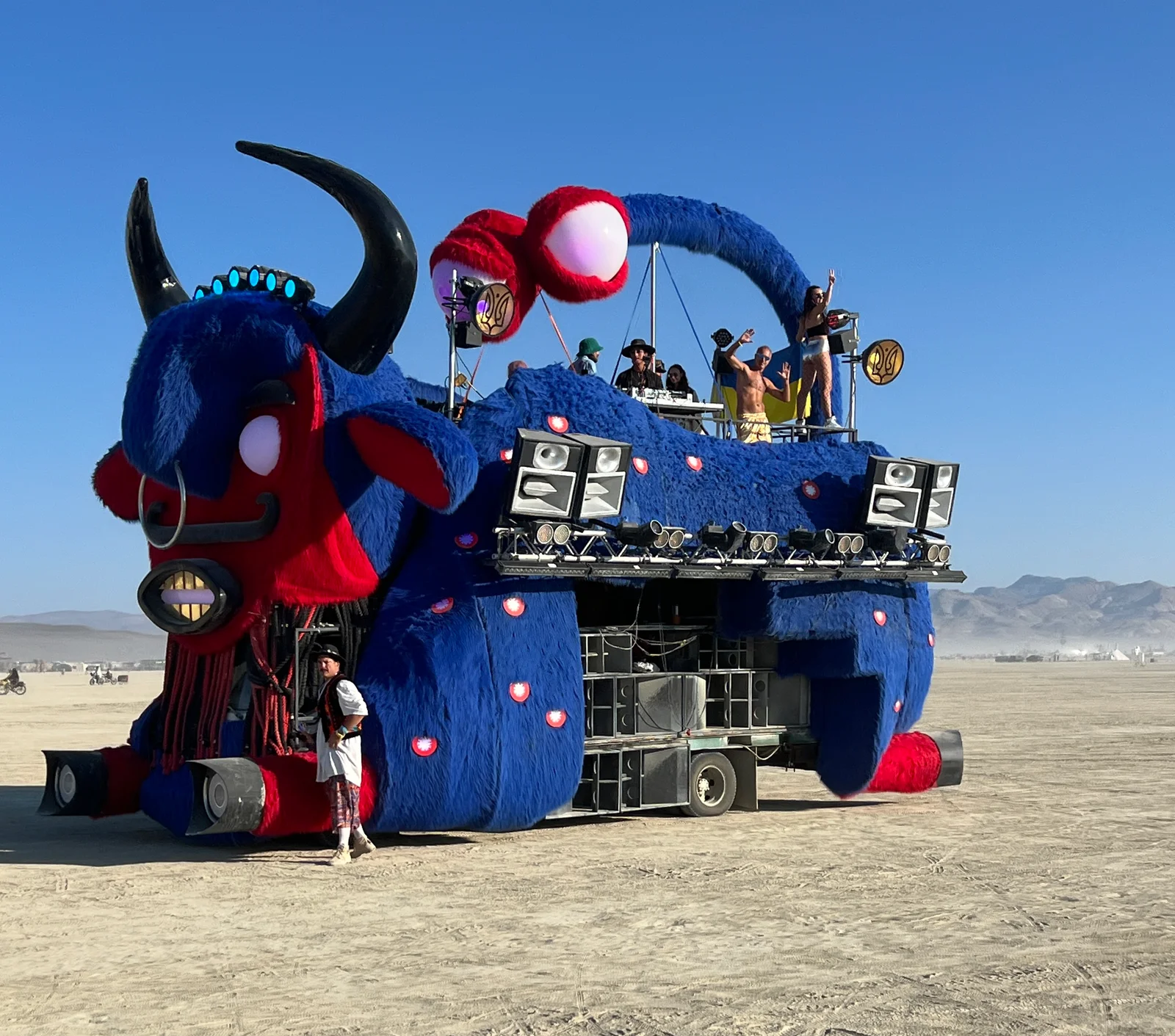
Blue Bull is also our art car, pictured here at Burning Man. The blue bull body brings a DJ deck, speakers and lighting together in one moving installation.
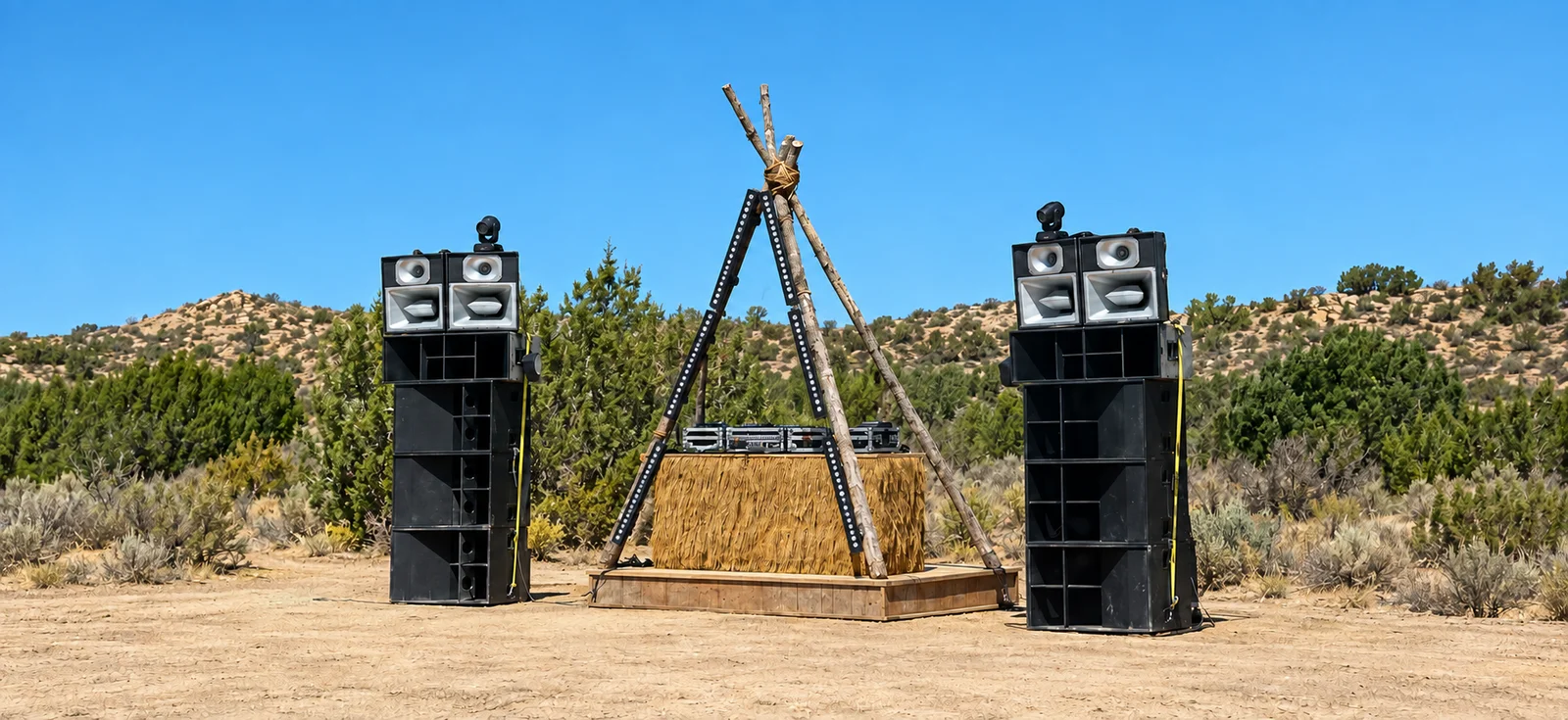
More about Blue Bull on Kurenivka ↗The freestanding Blue Bull Sound System puts the sound in two separate stacks, with the DJ booth between them. The diagram above shows how the four frequency bands share the work in that setup.
Bring Blue Bull sound to your event →WHY DIVIDE THE WORK?
The subwoofer section handles the lowest band. The dedicated mid-bass cabinets take the next part, before the signal reaches the smaller drivers in the tops.
The 10-inch and 1.4-inch drivers share a cabinet but serve different bands. That is why the main system has four ways even though you see three cabinet types.
A crossover divides the signal. Filters, levels and timing must then work together so adjacent bands combine well at the listening position. More bands also mean more alignment work.
| Band | Example range | Driver |
|---|---|---|
| Sub-bass | 40–90 Hz | 18-inch BMS 18S430v2 |
| Mid-bass | 90–300 Hz | 12-inch FaitalPro 12HP1060 |
| Midrange | 300 Hz–1.5 kHz | 10-inch FaitalPro 10PR410 |
| Highs | 1.5–18 kHz | 1.4-inch FaitalPro HF148C |
The two DJ monitors let the performer hear at the booth. The four compact speakers can cover smaller areas. Neither is a fifth band of the main dance-floor system.
Published driver ranges can overlap. The cabinet, horn, crossover and on-site tuning determine the working band in a complete system. The numbers in the illustration explain the principle; we have not verified the current Blue Bull XTA preset.
Equipment mapping: Blue Bull packing list and RE:WIND coordination drawing supplied by the owner. Manufacturer specifications checked September 2026.
No. It means four frequency bands. Blue Bull has multiple cabinets per band, and each mid/high top contains both a 10-inch midrange driver and a 1.4-inch high-frequency driver.
No. The chart uses an illustrative split at 90 Hz, 300 Hz and 1.5 kHz to explain the roles. Actual crossover frequencies, slopes, delays and levels depend on the cabinets, processing and measured setup. This page is not a tuning preset or a measured frequency-response chart.
No. They serve other listening positions. The monitor pair serves the DJ, while the compact speakers can serve smaller zones. They do not add bands to the four-way main system.
The extra band gives the system designer another way to divide the work. The result still depends on cabinet design, placement, crossover alignment, tuning and operating level. Four-way is a design choice, not a guarantee of quality or loudness.
Tell us the site, dance-floor footprint and running hours. We provide the tent, sound, lighting and generator power, with an on-site technical specialist included in the full-setup price.
Plan My Event Setup →